Tell It Wrong on Purpose: The Family Story That Grows a Little Every Year
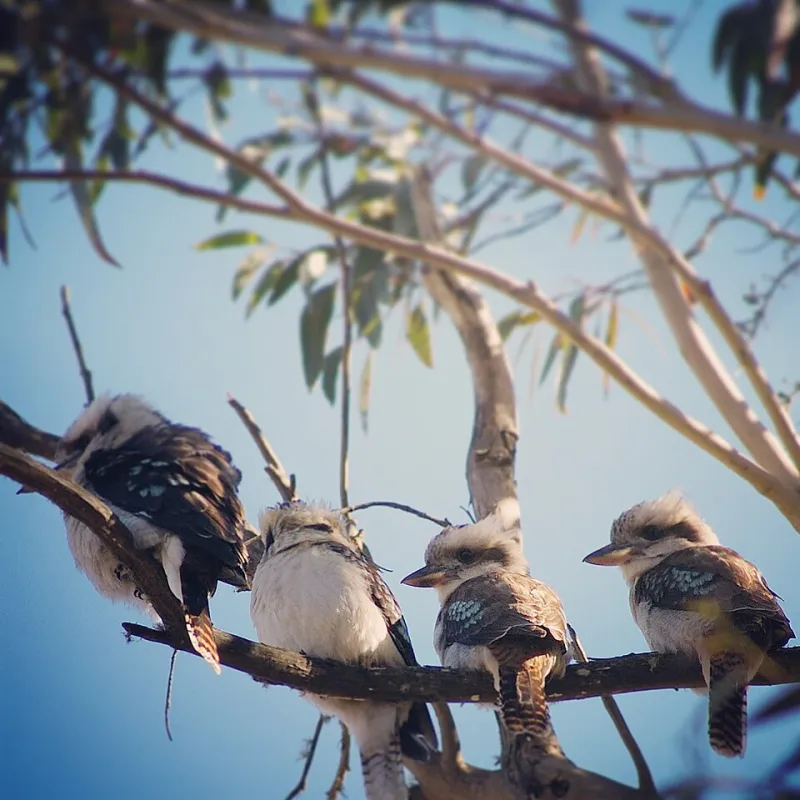
Photo: Taraslenz, CC BY-SA 4.0, via Wikimedia Commons
Every family we know has one story that gets told at every holiday dinner, and every family we know tells it slightly differently. In our house, it's the mango incident of 2019 — which may or may not have involved a grocery store in Sacramento, a toddler with impressive throwing arm, and a windshield that was definitely already cracked. Ask my husband and you'll get one version. Ask me, another. Ask our now-eight-year-old, and somewhere in the retelling the mango gains a face and the parking lot becomes a jungle.
We've stopped correcting anyone.
Here at Kecil Pohon, we think a lot about the small things families do on repeat — the nine-minute traditions, the doorframe measurements, the boring Sundays. But lately we've come around to something less structured: the family story that's allowed to be wrong on purpose. Call it a branch point — the moment your family lore splits into versions, the way a young tree splits toward the light.
Accuracy Is Overrated in Family Lore
There's a particular kind of American parent — and be honest, you might be one — who feels a low hum of anxiety about getting things right. The baby book with gaps. The photo albums that never got made. The worry that if we don't document everything accurately, we're failing at memory-keeping.
But kids don't experience family history as a record. They experience it as a performance. What sticks isn't the fact that it rained on your 2022 camping trip to Yosemite. What sticks is that Dad swears he saw a bear, that Mom laughed so hard she cried, that the marshmallows were "the size of softballs" — a detail your five-year-old added two years ago that nobody has bothered to remove.
The inaccuracies aren't a bug. They're the handle. A perfectly documented story is a museum piece. A slightly wrong one is a group project.
How to Spot Your Branch Point Story
You probably already have one — you just haven't given it official status. Look for these signs:
- It involves weather, food, or a minor disaster. The best family stories are almost embarrassingly small. A flat tire in a Target parking lot. The Thanksgiving the oven died. Nothing tragic — just enough chaos to be retellable.
- Everyone who was there remembers it differently. Congratulations, you have competing chapters.
- Someone under ten has already added a detail. A dragon, possibly. Leave it.
- It gets requested. "Tell the one about the mango!" is your invitation. Say yes.
Once you've found it, do something counterintuitive: declare it unofficially official. Ours is now called The Mango Story, capital T, capital M, and it's on the roster for every road trip and every too-long wait at a restaurant.
Let the Kids Run the Sequel
The real magic happens when you stop being the sole author. Once a year — New Year's Eve works, or the first night of a summer trip — we do what we call adding a chapter. Everyone gets to contribute one new detail to the story, and the rules are simple: it has to be wrong, and it has to be delivered with total confidence.
Last year our daughter decided the mango was actually bought as a gift for the governor of California. This year, apparently, the governor sent a thank-you letter. The story is now a federal matter. It is also, without question, the thing our kids will remember about being seven and nine — not the actual errand, which was forgettable, but the yearly act of making it more ridiculous together.
This is where the tree in Kecil Pohon earns its name. A tree doesn't grow by adding accurate rings. It grows by adding new ones — each one a little different from the last, shaped by that year's weather. Your family story works the same way. Each chapter is a ring. The wobbly ones are still growth.
Why the Wrong Version Wins
A story that's always told the same way eventually becomes background noise, like a song on hold. A story that mutates every year demands participation. Kids lean in because they're not just listeners — they're co-conspirators with editing privileges. And somewhere in the exaggerating and protesting ("That's NOT how it happened!") your children are doing something quietly important: they're learning that family is a thing you build out loud, together, and that nobody holds the copyright.
Someday, when they're grown, they'll tell the mango story to their own kids. It will be wronger still. The windshield crack will be a shatter. The parking lot will have a moat.
Good. That's the tree, growing.