Six Time Zones Away and Still at the Breakfast Table: Keeping Grandparents Close From Across the Ocean
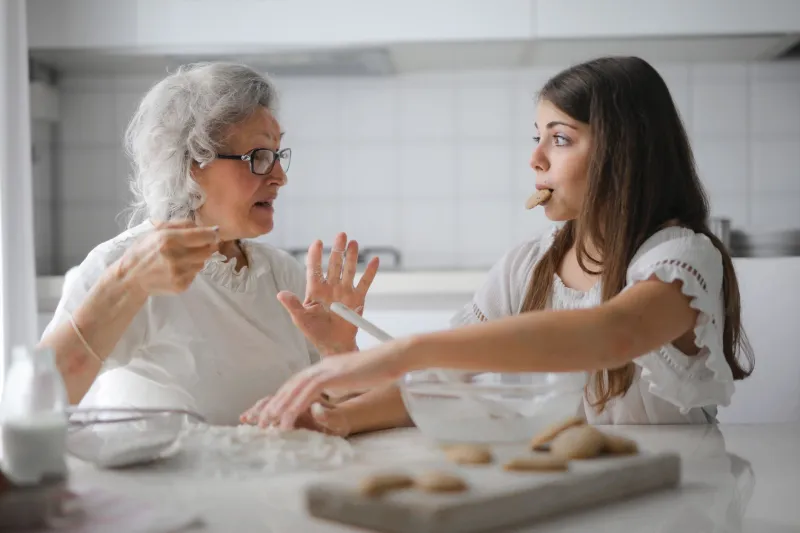
My daughter was three when she figured out that Grandma lives "inside the phone." She'd press her cheek to the screen during video calls, wave at the pixels, and wander off satisfied. It was adorable. It was also a little heartbreaking — because I knew what she couldn't yet: that the woman on the screen had a lap, a kitchen that smelled like fried shallots, a way of humming while she cooked that no video call can quite carry.
If you're raising kids far from where you grew up, you know this ache. The family tree is real, but it's a flight away — sometimes two, plus a layover in Doha. And the question that keeps immigrant and expat parents up at night isn't whether our kids will know their roots. It's whether roots can survive fourteen time zones.
I think they can. But not through grand gestures. Through the boring, beautiful machinery of small rituals.
The Problem With the Annual Visit
Here's the trap we fall into: we treat connection to the homeland like a subscription that renews once a year. The big summer trip. The month back "home." And look — those trips matter. But a twelve-month gap is an eternity in childhood. Your four-year-old will be a different person by the next visit, and so will the relationship.
What actually keeps a grandparent present in a kid's daily life is frequency, not duration. A two-minute voice memo on a Tuesday beats a two-week visit you spend jet-lagged and overwhelmed. Anthropologists who study transnational families have found the same thing: it's the small, repeated contact — not the rare intense one — that builds a child's sense of belonging.
So think less "reunion" and more "rhythm."
Voice Memos at Breakfast
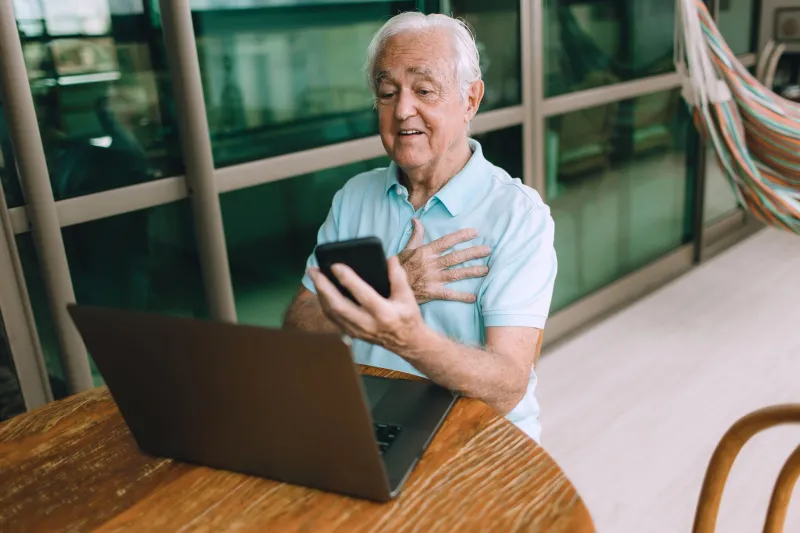
This is the one that changed things for us. Every morning at breakfast, my kids record a voice memo — sometimes a full report on the school day that hasn't happened yet, sometimes just a fart joke (Grandma gets a lot of fart jokes). She replies by afternoon our time, which lands right before their dinner.
The magic is in the asymmetry. Voice memos are asynchronous, so nobody needs to be awake, dressed, or camera-ready. A grandparent with shaky English or a shy grandchild can both participate without the pressure of live performance. And unlike a call, memos get saved. My daughter now has a little archive of her grandmother's voice going back two years — telling her goodnight, singing the same lullaby her own mother once sang to her.
If you want to formalize it: one memo out, one memo back, every day or every few days. Attach it to a meal so it becomes automatic. Rituals stick when they're welded to something the family already does.
The Recipe Swap (That's Secretly a History Lesson)
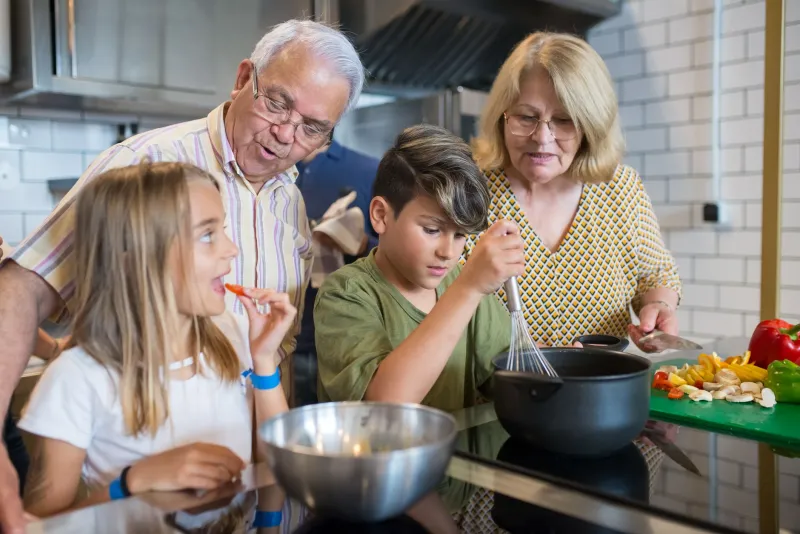
Once a month, we cook one dish with Grandma on video call. She instructs, we fumble, the kitchen ends up dusted with rice flour, and somehow the food tastes better for it.
But here's what I didn't anticipate: the recipes are trojan horses. While my son learns to fold the dumplings (badly), she tells him about the market where she bought the wrappers as a girl. About the monsoon season. About her mother's version of the same dish, made over a fire instead of a stove. A single recipe carries three generations of context, and my kids absorb it the way they absorb everything — sideways, while their hands are busy.
No extended family on video regularly? Recipe cards in the mail work too. Ask relatives to write one dish in their own handwriting, with the story of where it came from. That card becomes an artifact. Ours live taped inside a kitchen cabinet door, and my kids treat them like treasure.
Care Packages as Storytelling Prompts
We've all received the sad care package: expired candy and a pair of socks. Flip the script — make the box a story.
Grandma sends a dried seed pod from the tree in her yard, and we talk about what grew around it. A bus ticket stub. A photo of the house at dusk. A snack that my kids have to guess the flavor of. Each object is a prompt, and the unboxing becomes an event we stretch across a whole evening.
Then we send one back, and this is the part that matters for the kids: they choose what goes in. My daughter once sent a drawing of our dog wearing a hat, a leaf from our backyard maple, and a "recipe" she invented. The package isn't the point. The point is that she's practicing being in a relationship with someone she can't hug — which, honestly, is a skill her whole generation is going to need.
Let the Kids Own It
One last thing, and I say this as someone who got it wrong for a while: don't be the sole translator of your kids' heritage. If every connection to the homeland routes through you — your nostalgia, your homesickness, your explanations — it becomes your project, not theirs.
Let them ask Grandma their own questions, even silly ones. Let them mix languages badly. Let them decide that the voice memo tonight is about their loose tooth and not the folklore you were hoping for. Roots that are handed down like homework get resented. Roots that grow out of a relationship — even a long-distance one held together by voice memos and dumplings — hold.
The tree metaphor is baked into this site's name for a reason. Kecil pohon — little tree. But nobody plants a little tree by flying it to the forest once a year. You water it. A little, often, without fanfare.
So does the ritual. Two minutes at breakfast. A box in the mail. A pot bubbling on the stove while a voice on the phone says, "No, slower — like this."
That's the whole thing. That's enough.