Press Record Before the Stories Disappear: The Case for Interviewing Your Own Parents (and Yourself)
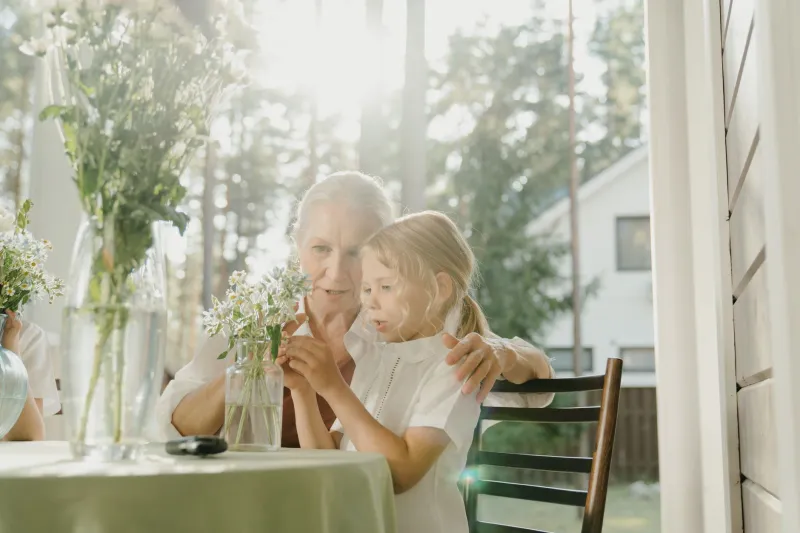
There's a video my sister sent me last year. It's four minutes long, filmed on a phone, slightly tilted. Our mom is sitting on the back porch in Ohio, holding an iced tea, answering a question our niece asked her: What was school like when you were little?
Mom talks about walking a mile each way, about the woodstove in the classroom, about a teacher named Mrs. Halloway who read aloud after lunch. Nothing earth-shattering. And yet my sister and I both watched it three times in a row and then called each other, a little embarrassed about how much it mattered.
Here's the thing nobody tells you: the stories that end up meaning the most are the ordinary ones. And they are almost never written down.
The Archive You Already Own
At Kecil Pohon, we spend a lot of time thinking about trees — how a sapling becomes something that outlives the person who planted it. Family stories work the same way. They start small and a little crooked, told in the car or over dinner, and if nobody tends them, they thin out. By the time your kids are grown, most of what they'll know about you is whatever happened to get photographed.
Photos don't capture your grandmother's laugh. They don't hold the way your dad described his first job, or the version of the story he told when he thought no one was really listening.
But a recording does. And the barrier to entry is embarrassingly low. You already own the equipment. It's in your pocket.
A Nine-Minute Ritual
The trick is to keep it small. Don't announce a legacy project over Thanksgiving dinner — that's how you end up with stiff performances and a camera nobody wants to look at. Instead, treat it like a game. Hand a kid your phone, let them 'be the reporter,' and give them a short list of questions.
A few that reliably unlock good material:
- What was I like when I was your age? (Ask this one to your parents about you. Prepare to be surprised.)
- What's the naughtiest thing you ever did as a kid?
- What did Saturday mornings look like in your house growing up?
- What's a smell that takes you straight back to being little?
- What did you want to be when you grew up — and what happened instead?
- What's the best advice you ever ignored?
- Who was your favorite teacher, and what did they do?
- What's something you worried about back then that turned out fine?
That last one is a sleeper hit with kids. There's real comfort, for a seven-year-old lying awake about a spelling test, in hearing that Grandpa once worried about things too, and here he is, fine, telling the story.
How to Actually Do It
A few practical notes, learned the slightly-hard way:
Pick a quiet spot. A porch, a parked car, the kitchen after bedtime. Background noise is the enemy of a recording you'll want to rewatch.
Let the kid run it. If your child asks the questions, the tone changes completely. Grown-ups perform for other grown-ups. They relax for kids. Some of the best answers come from a follow-up your eight-year-old improvised because the script ran out.
Keep sessions short. Ten minutes is plenty. You can always do a second round. A long interview feels like homework; a short one feels like a treat.
Don't fix the mistakes. The pause before the answer, the 'oh gosh, let me think,' the dog barking in the background — that's not noise, that's texture. Perfect is for podcasts. This is your family.
Label it immediately. Date, names, occasion. Future You will not remember whether this was 2024 or 2025, and neither will anyone else.
Why It's Worth More Than You Think
The obvious payoff is downstream — someday, an adult child scrolling through old files, finding their mother's voice describing her childhood kitchen. That's the treasure. That's real.
But the surprise is what it does right now. Something shifts when a kid gets to be the interviewer instead of the interviewee. They listen differently. They lean in. And the grown-up being asked what were you like at my age gets a rare, lovely thing: the chance to hand down who they were before they were someone's parent.
My mom, in that porch video, ends with a line she probably doesn't even remember saying. My niece asks if she was scared of anything back then, and Mom laughs and says, 'Honey, I was scared of everything. Turns out most of it never happened.'
That's the whole archive, right there. Four minutes, one iced tea, a tilted phone camera.
Plant the seed now. Trees take time — but they only grow if someone puts them in the ground.