Nasi Goreng Over FaceTime: Turning Grandma's Video Calls Into Your Kid's First Cooking Class
The Call That Goes Nowhere
Every Sunday at 4 p.m., my sister-in-law's phone lights up with a call from her mother-in-law in Surabaya. For the first few months, those calls followed a familiar script: the camera pointed at the ceiling, the kids shouting 'I can't see you!' and then running off, the whole thing ending in under ten minutes with everyone feeling vaguely guilty.
Then one week, Bu Ratna had an idea. Instead of just talking, she told the kids to bring a bowl, an egg, and some leftover rice to the table. By the end of the call, they had made nasi goreng together — her guiding, them cracking, all four of them laughing at the same screen.
Nothing about that kitchen changed. What changed was the call had a purpose.
Why Cooking Beats Small Talk
Here's the thing about little kids and video calls: they run out of things to say in about ninety seconds. 'How was school?' 'Fine.' 'What did you learn?' 'Nothing.' And then the silence.
But give a four-year-old a task — stir this, smell that, tell me what color it turned — and suddenly the conversation runs itself. Cooking gives the call a shared object, something both sides of the screen are looking at and doing together. It's the difference between a phone call and a visit.
There's a second thing happening too, and it might matter more. When your kid learns rendang from the person who actually makes it best, they're not just learning a recipe. They're learning whose kitchen they come from. Food is the most durable piece of heritage there is — it survives moves, languages, and time zones better than almost anything else.
A Simple Framework: Pick Recipes by Age, Not by Dish
You don't need a culinary curriculum. You need one recipe per call, matched to what your kid can actually do. Here's the rough guide we use:
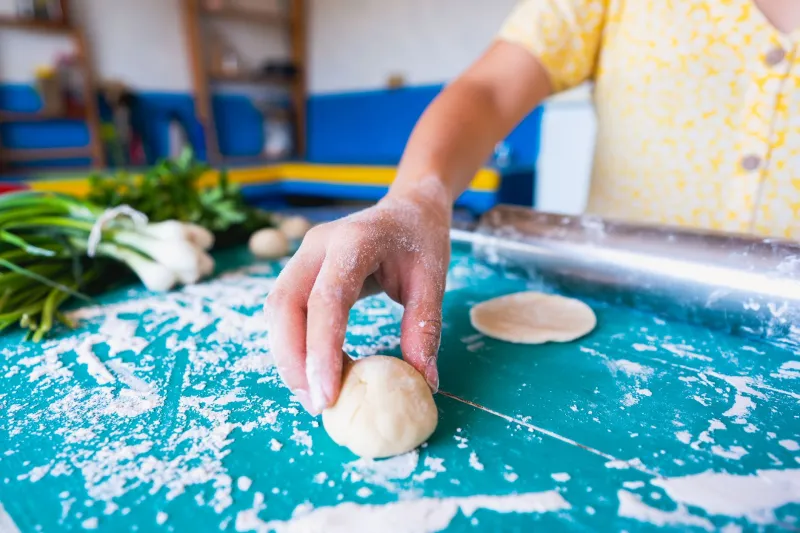
Ages 2–3: The Dumper and Stirrer. Choose recipes that are mostly assembly — mixing batter, tearing lettuce, sprinkling toppings. Think klepon-adjacent projects like rolling dough balls, or helping season fried rice that Grandma has mostly prepped on her end. The key: the toddler does three things, and those three things are the whole activity for them.
Ages 4–6: The Cracker and Counter. This is the sweet spot. Kids this age can crack eggs (yes, with some fishing out of shells), measure rice, count spoonfuls, and squeeze lime. Sambal-free dishes like perkedel — mashed potato patties — are perfect because shaping them feels like playdough.
Ages 7–10: The Actual Cook. With an adult nearby for heat and knives, older kids can follow a recipe start to finish over video. Mie goreng, simple soups, even their first attempt at steamed treats. Grandma becomes the instructor, and the kid becomes her student — a dynamic that delights both of them.
One rule that saves a lot of frustration: prep your side before the call. Wash the rice, pull out the pan, pre-measure the fussy ingredients. The call should be the fun part, not the mise en place.
Keeping Toddlers Engaged Past Minute Four
Any parent who's done screen time knows the toddler attention span is brutal. A few tricks that work:
- Keep calls short on purpose. Thirty to forty minutes, max. End while it's still fun.
- Give them a prop station. A small bowl, a wooden spoon, a cup of rice to pour back and forth. Busy hands stay at the table.
- Let Grandma be the star. Ask her to hold ingredients up to the camera, make a face when the sambal is spicy, tell a story about her own mother's kitchen. Kids stay for characters, not curriculum.
- Cook the same thing on both ends. Even if the toddler just stirs a bowl of nothing, matching what Grandma is doing makes it feel like one kitchen, not two.
Make It a Ritual, Not a Stunt
The magic of the nasi goreng Sunday wasn't the recipe — it was the repetition. Same time, same call, one dish a week, building up over months into a little cookbook of memories. My niece now refers to certain dishes as 'Grandma's' even though she made them herself, in Ohio, with a phone propped against the fruit bowl.
Start with one recipe this month. Ask the relative on the other end what they'd want your kid to know how to make. Then let the screen do what it does best, when we let it: shrink the distance until the kitchen feels like one room with a lot of people in it.