Claim a Tree That Isn't Yours: The Case for a Family Parking Lot Landmark
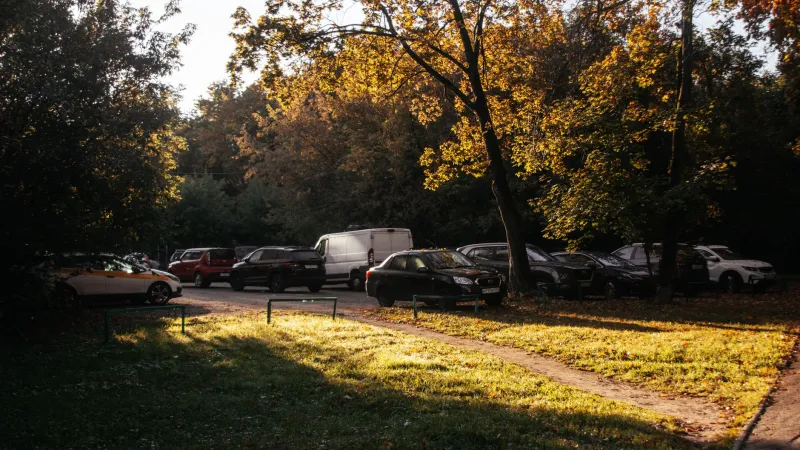
Here's a confession from a family that rents a two-bedroom apartment with a balcony the size of a yoga mat: my kids have a tree. It is not our tree, legally speaking. It belongs to the city, or maybe the shopping center, or possibly nobody at all. It's the big honey locust in the parking lot of our neighborhood library, and we have been visiting it, photographing it, and measuring ourselves against it for three years now.
Nobody told us to do this. It just happened, the way the best family rituals usually do — accidentally, then on purpose.
How a Tree Becomes Your Tree
It starts small. You park a little farther away than usual. You notice the tree because your kid notices the tree — kids are natural scouts for interesting bark, low branches, and anything climbable. One day you walk past it and say, "Look how much the leaves changed." The next week, they ask about it. And just like that, you're in a relationship.
If you want to be intentional about it, the recipe is simple:
- Pick a tree you already pass regularly. The library, the soccer field, the grocery store, the walk to school. Proximity beats beauty. A scrappy Bradford pear you see twice a week beats a magnificent oak across town you'll visit once.
- Name it. Not a pet name — a real one, decided by committee. Ours is "Bee Tree" because of one memorable June afternoon. Your kids will remember the naming argument longer than the tree itself.
- Give it a job. Meet there before library story time. Take the first-day-of-school photo under it. Let it be the finish line of every bike ride.
That's it. No plaque, no permission slip, no adoption fee. Just attention, repeated.
The Rituals That Grow Around It
Once you've claimed a tree, the traditions start stacking up on their own, but here are a few that have worked for us and for other parking-lot-tree families we've met (yes, this is a real community — look for the families photographing kids against bark in October):
The height check. Stand your kid against the trunk every season, mark it with your hand, and keep the measurements in your phone with dates. Unlike the pencil marks on a doorframe, you can't take a parking lot tree with you when you move — but the photo archive travels anywhere.
The same-spot photo. Same angle, same kid, four times a year. By year two, you'll have a flip-book of a child growing while the tree cycles through bare, budding, green, and gold. This costs nothing and somehow becomes the image grandparents ask for.
The scavenger seasons. First bud spotted, first leaf fallen, first snow sitting on the branches. Whoever notices it first gets to declare the season officially changed. This gives kids a reason to actually look at the natural world instead of scrolling past it.
The offering. Some families leave a pinecone. Mine leaves nothing but takes a single fallen leaf home every fall, pressed in the biggest dictionary we own. It's our version of a souvenir shop, and the total bill so far is zero dollars.
Why This Works When You Don't Own Dirt
There's a particular ache in raising kids in a rented, urban, or suburban-cookie-cutter space — the feeling that nothing is really yours, that home is temporary, that the landlord could repaint the nursery while you're at work. A family tree quietly answers that ache.
A living landmark says: this corner of the world knows us. We have a place here. It's not on a deed, but it's real, and your kids will defend it with the ferocity of tiny property lawyers. I've watched my six-year-old explain to a confused stranger that this is "our tree, but you can look at it."
There's also the long game. Kids who watch one tree through every season learn something that no nature documentary quite teaches: that places change slowly and reliably, that winters end, that the same living thing can be unrecognizable and completely itself at once. That's a lesson in patience — and honestly, a lesson for the parents too.
And when you do eventually move? You visit. We did, last spring, two years after leaving our old neighborhood. The kids ran ahead to the parking lot like the tree owed them a hug. Maybe it did. It had been there for every first day of school.
Go Find Yours This Week
You don't need a plan. Walk out your door, head somewhere you were already going, and look up. Somewhere between the curb cuts and the shopping carts, there's a tree with a low branch and good shade, waiting for a family to notice it.
Name it. Photograph it. Come back when the leaves turn.
That's the whole tradition. It takes nine minutes and it lasts a childhood.