What If Your Kid Just Needed a Boring Sunday?
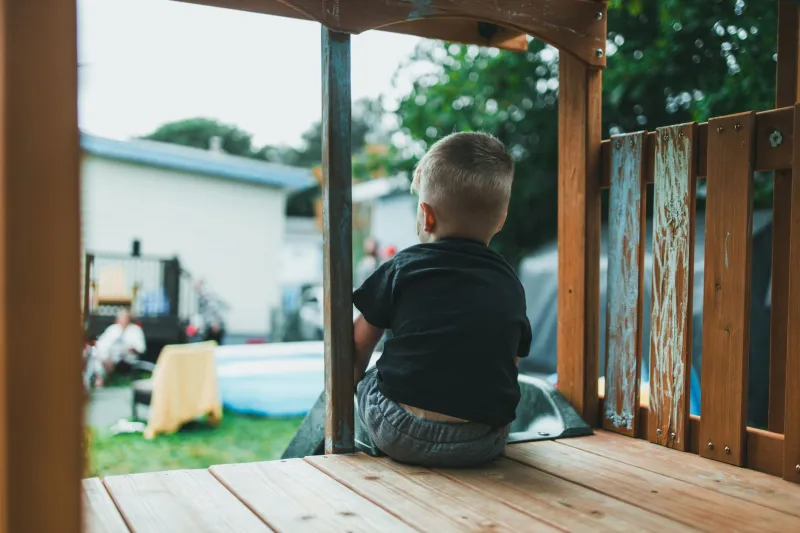
There's a moment I keep coming back to. Last spring, my six-year-old sat on the back porch doing absolutely nothing — just watching an ant carry a crumb twice her size across a patio stone. She was there for forty minutes. Forty. Minutes. And I almost interrupted her, because we were "supposed" to be leaving for a birthday party.
We didn't go. And it turned out to be the best parenting decision I made all month.
The Calendar Crept Up on Us
Somewhere along the way, American childhood became a subscription service. Saturday: soccer at 9, birthday party at noon, piano at 3. Sunday: swim lessons, then a "family outing" because a weekend without an outing somehow feels like a failure. We'd never admit it out loud, but we've started treating our kids a little like small professionals building a résumé.
The intention is love. Of course it is. We want them exposed to things, confident, well-rounded. But here's what the research on child development keeps whispering while we're driving to the next activity: unstructured play isn't the empty space between learning. It is the learning.
When a child has a free afternoon, they invent games, negotiate rules with siblings, get bored, push through the boredom, and discover something on the other side of it. None of that happens during a coach-led drill. Boredom is the doorway; we keep slamming it shut.
The Tree We Named Ourselves After
We call this site Kecil Pohon — "little tree" in Indonesian — and the name was never just cute. A tree does not grow on a schedule. You cannot enroll it in enrichment. It grows slowly, roots before branches, and the slow part isn't a flaw in the design. It's the design.
Kids are the same. The roots — security, imagination, the feeling that home is a place with no agenda — grow underground, invisibly, on quiet afternoons. The branches, the visible stuff like reading levels and goal-scoring, only get tall because the roots got deep first.
When we fill every weekend hour, we're basically demanding fruit from a sapling.
The Case for One Slow Sunday a Month
I'm not suggesting you cancel everything and move to a cabin. Most of us can't. I'm suggesting something smaller and more doable: one Sunday a month with no plan. No classes, no errands-as-events, no drive-to-somewhere. And — this is the part people resist — keep it screen-light, too. Not because screens are evil, but because a tablet fills the boredom gap just as efficiently as a piano lesson does, and the whole point is the gap.
Here's what ours looks like:
- Announce it like a holiday. Kids take their cues from us. If we frame the slow Sunday as a treat — "it's Do-Nothing Day!" — they'll meet it with excitement instead of whining.
- Stock the easy stuff. Pancake batter, art supplies, a stack of library books, sidewalk chalk. Low effort, open-ended.
- Let the day be boring out loud. Say "I don't know, what do YOU feel like doing?" and then resist the urge to solve it.
- Do a little nothing yourself. Sit down. Drink your coffee while it's hot. Your kids watching you be still is a lesson no class teaches.
The first slow Sunday, our kids moped for about an hour. By afternoon they'd built an elaborate blanket fort with a "gift shop" and a system of pretend currency. Nobody organized that. Nobody could have.
What We're Really Buying
I think the packed-schedule instinct comes from a quiet fear: that if we don't give our kids every opportunity, they'll fall behind. But behind is a race that mostly exists in adult marketing. Childhood isn't a race with a finish line. It's a growing season.
And seasons can't be rushed. Ask any gardener, any farmer, any grandmother in a village in Java watching a mango tree she planted decades ago. The tree takes the time it takes — and so do the kids sitting in its shade.
So here's my pitch: pick a Sunday this month. Put nothing on it. Watch what grows.