The Bow at the Door: What Indonesian Kids Know About Leaving Home That Ours Don't
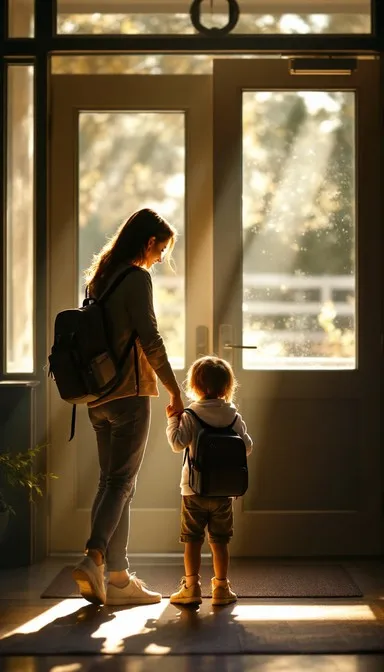
Photo: child bowing goodbye at front door morning light, via images.stockcake.com
My eleven-year-old has perfected the shoulder-shrug goodbye. You know the one — he's already halfway out the door, earbuds in, tossing a "bye" over his back like loose change. Some mornings I stand in the kitchen holding my coffee and wonder when exactly our front door became a revolving door nobody actually passes through.
Then I remembered something from my college roommate's family, who came from Java. Every time one of the kids left the house — even just to run to the corner store — they'd pause at the doorway and do a small, quick bow toward their parents. Hormat, it's called. Respect, made physical. And every time they came home, the same pause in reverse. Two seconds, maybe three. But the door was never just a door in that house. It was a line, and crossing it meant something.
We don't have anything like that in my house. I'd guess most American families don't either. And I think we're paying for it.
The Doorway Is the Oldest Boundary We Have
Every culture that has front porches figured out something about thresholds. In Indonesia, the hormat bow at the door isn't ceremonial in a stiff way — it's muscle memory, the kind of thing a five-year-old does without thinking. Hands together, a slight dip of the head, a moment of eye contact with whoever's home. I'm leaving. You matter. I'll be back.
American families have fragments of this. My grandmother said "mind your manners" at the door. Some families do "kiss, hug, high-five" departure rituals. But somewhere between kindergarten drop-off and middle school, most of these dissolve. The goodbye becomes a grunt. The homecoming becomes a door slam.
Here's my unpopular opinion: that's not a tween problem. That's a design problem. We removed the ritual and then acted surprised when the transition stopped meaning anything.
Tweens Push Boundaries Because We Stopped Marking Them
Everyone warns you about the middle school years — the door slamming, the one-word answers, the sudden allergy to being seen saying goodbye to you in public. The standard advice is to give them space. Fine. But there's a difference between space and absence.
The hormat tradition understands something we've forgotten: boundaries aren't just walls. They're doorways, and doorways work in both directions. A kid who pauses at the threshold isn't being controlled — they're being located. You're here. This is home. These people are yours. The bow takes three seconds; the belonging it reinforces lasts all day at school.
When my son started pulling away from goodbyes, my instinct was to cling harder, which — ask any therapist — is exactly wrong. What actually helped was shrinking the goodbye. We didn't need a hug and a speech at the bus stop. We needed ten seconds at the front door where he was still my kid before he became a sixth grader.
Build Your Own Threshold Ritual (It Should Be Slightly Embarrassing)
Ours started as an accident. One morning I said, "Hey — before you go, tell me one thing you're going to do today that I'd be proud of." He rolled his eyes so hard I heard it. But he answered. The next morning, he answered again before I could ask. Now it's just what happens at the door, and if I'm still in bed, he yells it up the stairs, which is somehow better.
Some threshold rituals worth stealing or inventing:
- The reverse hormat. A hand squeeze at the door on the way out, same hand on the way back in. Non-negotiable, non-negotiated, weirdly beloved.
- The welcome-home question that isn't "how was your day." Ours is "what was the weirdest thing that happened?" It works because it can't be answered with "fine."
- The pause. Literally just that — everyone in the house who's home comes to the door for the first thirty seconds of a homecoming. No phones. Thirty seconds is nothing and it's everything.
- The threshold handoff. Whatever fight or bad mood happened inside stays inside; whatever happened outside gets left at the door. Say it out loud. Tweens will mock it. Tweens will also do it.
The trick is keeping it small. A ritual that takes effort becomes a chore, and chores get abandoned by February.
Why the Little Tree Keeps Its Roots at the Door
We named this site Kecil Pohon — little tree — because we believe families grow the way trees do: slowly, at the edges, in unremarkable weather. Nobody notices the day a root deepens. But thresholds are where roots do their quiet work. The doorway is where a family decides, daily, that crossing back and forth doesn't erode what's underneath.
I can't promise a door ritual will save your relationship with your tween. But I've noticed something since ours started. When he leaves, he leaves slower. When he comes home, he comes home louder — in the good way, the I'm here way. The door still slams sometimes. Tweens gonna tween.
But now, once a day, he pauses at the line. Two seconds of eye contact. A boundary that's also a bridge.
That's not nothing. That might be everything.