Some Kids Are Oaks: A Case for Letting Them Bloom on Their Own Schedule
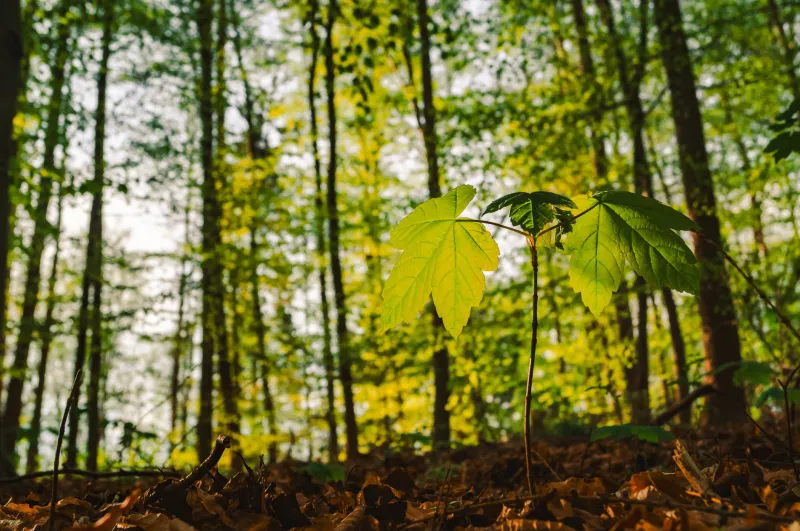
There's a red maple in my backyard that the previous owners planted, according to a neighbor, "sometime around when the last Star Wars movies came out." For the first three years we lived here, I was convinced it was dying. Every spring, the neighbor's Bradford pear exploded into white blooms two weeks before our maple showed so much as a bud. I watered it. I fertilized it. I looked up "maple tree not leafing out" at 11 PM more than once.
Then one April it simply took off — and within two seasons it had outgrown the pear in every way that matters. The pear blooms early and then drops a mess. The maple took its time and now shades half the yard.
I think about that tree every time another parent asks me when my son started reading.
The Tyranny of the Percentile
We have built an entire surveillance apparatus around childhood development, and we've convinced ourselves it's love. The growth chart at the pediatrician's office. The app that tells you what sounds your two-year-old "should" be making. The well-meaning auntie at Thanksgiving asking, loudly, whether the kid is talking yet.
Some of this is genuinely useful — early screening catches real things, and I'm not here to argue against that. But somewhere along the line, the tools for spotting problems turned into a scoreboard for everything. Normal became the goal, and early became the gold standard, as if development were a race where the trophy is a participation sticker and a lifetime of mild anxiety.
Here's what nobody tells you: the chart doesn't know your kid. It knows an average of thousands of kids, none of whom is your kid.
Over-Watering, but for Parents
Anyone who has killed a houseplant knows the paradox: you love it, so you water it, and it drowns. The care itself becomes the problem. Plant people have a term for the fix — "benign neglect" — the discipline of doing less and trusting the roots you can't see.
Milestone obsession does to parents what over-watering does to plants. You hear a kindergartner is reading chapter books, so you drill sight words at a kitchen table where your kid just wanted to talk about the squirrel outside. You compare nap schedules and phonics apps and swim lesson levels, and the attention you're pouring in isn't nourishment anymore. It's runoff. It pools in the parent's anxiety and the kid's vague, corrosive sense that they are behind — a feeling they can't name but absolutely absorb.
Child development folks have known for decades that the range of "typical" is enormous. Kids walk anywhere from nine to eighteen months and nobody can tell the difference in the sandbox by second grade. Late talkers catch up. Late readers, given time and books they actually like, become the adults who read voraciously. The research on late bloomers is boringly consistent: most of them bloom.
In Praise of the Slow Species
Here's the thing about oaks and maples: their slowness isn't a defect. It's a strategy. Fast-growing trees put energy into height and pay for it in weak wood. Slow growers build dense, durable rings — the kind of wood that holds treehouses.
Some kids are like that. They're not racing to the next milestone because they're busy consolidating. They watch the whole game before they play it. They're building rings.
I'm not suggesting we throw out the growth charts or ignore a genuine developmental concern — a good pediatrician is worth their weight in stickers, and "wait and see" should always be an informed wait. What I'm arguing against is the ambient culture of comparison, the quiet ranking of childhoods at birthday parties and in Facebook groups. Our kids don't need us hovering with a watering can. They need decent soil: a patient adult, unstructured afternoons, books within reach, and the radical assumption that they know something about their own timing.
Trust the Rings
My son learned to read at his own pace, which was, according to every timeline I consulted, "later than expected." He is now ten and reads under the covers with a flashlight, which is to say: nobody at his future college will ever ask when it started.
The maple in my backyard is enormous now. Every spring I look at the pear next door — blooming early, dropping early — and I feel a small, smug kinship with my slow, sturdy, spectacular tree.
Kids aren't crops. There's no harvest deadline. Some of them are oaks, and oaks take their sweet time on purpose. Our job isn't to rush the rings. It's to stand nearby, keep the soil good, and refuse to mistake late for less.