The Weekend Project That Gets Your Kids to Ask for Quiet Time
Every parent has heard it: the whine, the flop onto the floor, the declaration that there is nothing to do. And every parent has also watched, baffled, as the same child ignores a house full of toys to sit inside a cardboard box.
Here's the secret hiding in that cardboard box: kids don't want more stuff. They want a place that feels like theirs — small, cozy, and just a little bit magical. That's exactly what a reading nook is. Call it a story fort, a book den, a little tree to grow up under. Whatever you name it, one corner of your home can become the spot where your kid begs for twenty more minutes with a flashlight and a picture book.
And no, it doesn't require a trip to a Scandinavian furniture store.
Start With the Corner, Not the Shopping Cart
Look around your home for the most boring square footage you own. The awkward nook by the stairs. The foot of your kid's bed. That dead space next to the radiator. Corners work better than open rooms because kids crave the feeling of being enclosed — it's the same reason they love forts, hoodies with the hood up, and squeezing behind the couch cushions.
Once you've picked your spot, clear it completely. This is the one step busy parents skip, and it's the one that matters. A reading nook buried under last month's laundry reads as clutter, not sanctuary. Fifteen minutes of ruthless clearing does more than two hundred dollars of decor.
The Three-Ingredient Formula
A nook that gets used daily needs exactly three things:
1. Something soft to sit on. A floor cushion, a folded quilt, a foam pad from a hand-me-down crib mattress. If your budget allows, a small beanbag is the reigning champion of kid comfort. If not, a sleeping bag zipped halfway open works beautifully and costs nothing.
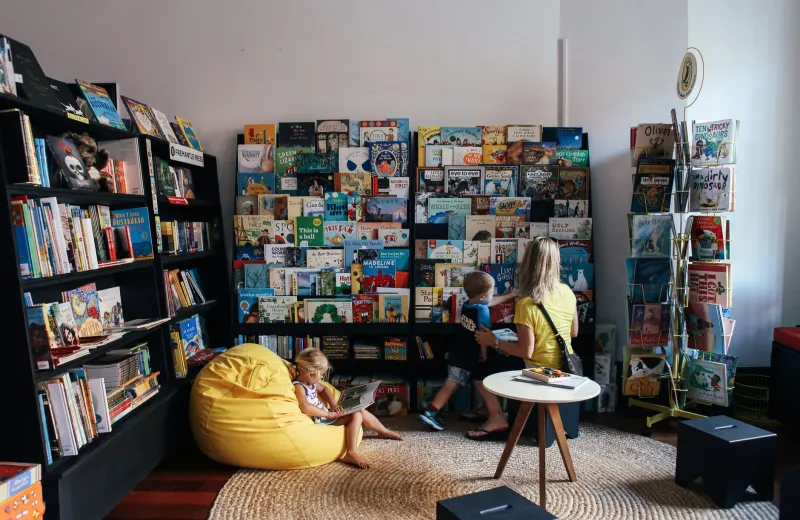
2. Books within arm's reach — but not too many. This is the part nobody tells you: a shelf crammed with 200 books is a wall of noise to a six-year-old. Instead, use a small basket or a single low shelf holding six to eight books. Rotate them every week or two, pulling from the rest of your collection or the library. A book that's been "missing" for a month comes back feeling brand new.
3. One light source they control. A clip-on reading light, a small lamp with a dimmer, a string of fairy lights pinned safely along the wall. The magic isn't the brightness — it's the autonomy. A kid who can turn on their own reading light feels like the nook belongs to them, not to the adults.
That's it. Everything else is optional frosting.
The Free (or Nearly Free) Upgrades
If you want to level up without opening your wallet:
- The blanket ceiling. Drape a lightweight sheet or quilt over two adhesive wall hooks to create a canopy. Instant fort energy, zero construction.
- The naming ceremony. Let your kid name the nook. "The Reading Burrow." "Book Mountain." Write it on a paper sign and tape it up. Ownership is the whole game.
- The stuffy staff. One or two stuffed animals get permanent residence as "reading buddies." Rotate the roster like a tiny sports team.
- The snack rule. A small cup of crackers or apple slices allowed only in the nook gives it a special-occasion feel. Yes, you'll find crumbs. Worth it.
Your Weekend Checklist
For the parents doing this between soccer games and grocery runs, here's the whole project in under three hours:
Saturday morning (30 minutes): Choose and clear the corner. Vacuum. Done.
Saturday afternoon (30 minutes): Gather your soft thing, your basket, and your light. Assemble with your kid watching — ideally helping. Their fingerprints on the setup matter more than your interior design instincts.
Saturday evening (15 minutes): Do the first read-in together. Make it an event: pajamas optional, popcorn allowed, one chapter or three picture books. You're setting the ritual, not just the furniture.
Sunday (10 minutes): Fill the basket with six to eight books chosen by your kid. Mark a calendar reminder to rotate the selection every two weeks.
Ongoing (zero minutes): Resist the urge to manage it. If the nook becomes a nap spot, a fort, a secret clubhouse that occasionally involves books — congratulations, it's working.
The Point Isn't the Pillows
A reading nook isn't really about reading, anyway. It's about carving out one small corner of a loud world where your child gets to be slow and quiet and in charge. The books will come and go. The fort may collapse and get rebuilt a dozen times. What sticks is the message underneath the whole project: this space is yours, and being in it with a story is something our family values.
Start with a corner. Add a blanket. Watch what grows.